Iran Amok
Why are we at war with Iran?

First Some Context
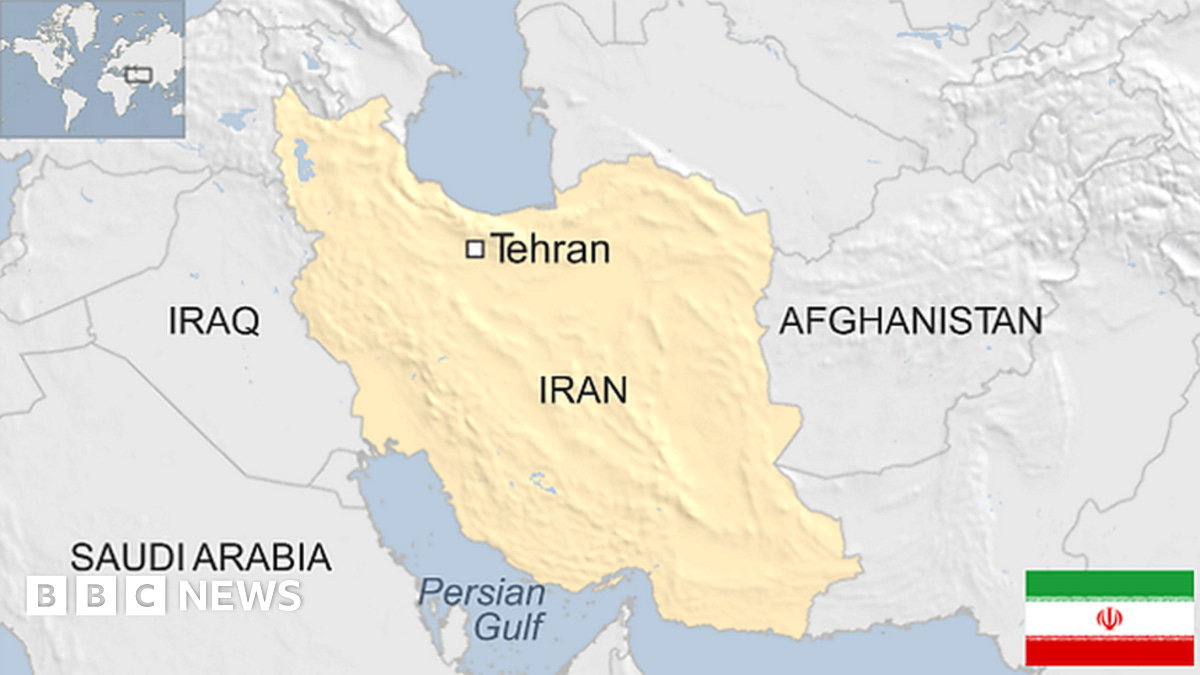
I started this post with a map, because it is important to see where Iran is physically located — astride the Persian Gulf (through which about 20% of the world’s oil flows) — Iran borders Iraq, Afghanistan, Turkmenistan, Armenia, Azerbaijan, Pakistan, and NATO ally Turkey. Just across the Gulf is Saudi Arabia, Qatar, the United Arab Emirates, Oman et al.
The geolocation of Iran is critical for at least two reasons. 1. It is centrally located and can project force across the entire Middle East. 2. Were Iran to descend into chaos, that chaos would likely leak across its borders into many other countries.
I will come back to these two points shortly, but first a little history.
Americans tend to look at all Eastern countries as monolithic, and similar. This is of course dangerously naive. Iran is a multi-ethnic nation of over 92 million people, with ethnic Persians (Fars) comprising about 61% of the population. The largest minority groups are Azerbaijanis (approx. 16–24%), Kurds (7–10%), and Lurs (6%), alongside smaller groups including Arabs, Baloch, Turkmen, and others. By comparison, the US (as of 2022) was 58% non-hispanic White, 12% Black, 19% Hispanic, and 6% Asian.
Iran is the largest Shiite Islam majority nation. About 90% of its population identifies as Shia. Most of the rest of the Middle East is Sunni Islam, and overall the Shia are a minority, representing about 10% of all Muslims today. The split between the Shia and Sunni happened in the year 632, and historically there has been conflict between the two groups. That’s probably an understatement.
Like much of the Middle East, the recent history of Iran was greatly affected by the Allied powers during, and after World War II. Iran nominally supported Germany in the war, was invaded by the Allies, who sought to secure its oil fields, and was reestablished as an independent nation, with largely its current borders, by the US, Russia, and Britain, after the war. But not too independent.
In 1951, a democratically elected Iranian Prime Minister, led its Parliament to nationalize the Iranian oil industry, which at the time was controlled by Britain. If you think a nation should be able to control its own natural resources, and that Britain’s only claim to Iranian oil was that it won it as a spoil of war — I agree with you. But of course the US and Britain had other ideas. They fomented political unrest in Iran and backed a coup, which deposed the democratically elected Prime Minister, and greatly expanded the powers of the Shah of Iran, Mohammed Reza Pahlavi. Essentially an autocrat, the Shah guaranteed Western access to Iranian oil, ruled with an iron fist — becoming wildly unpopular. He was deposed by the Iranian revolution in 1978-79, and ultimately Iran became a theocracy ruled by an Ayatollah.
I am old enough to remember the Iranian revolutionaries capturing the US Embassy in 1979, and interminably holding Americans hostage there, essentially sealing the political fate of President Jimmy Carter, and ushering in Ronald Reagan. Shortly after the Iranian revolution, Iraq, led by Saddam Hussein (remember him?) invaded Iran. The US supported Iraq1 in this war (irony alert) and ultimately estimates suggest that nearly a half a million people died in this conflict.2
All of this discussion is to suggest that there is a long history of the the West, and the United States engaging in heavy handed intervention with Iran and with Iranian sovereignty. Not surprisingly… they don’t like us.
Nuclear Weapons
Iran actually began its nuclear program, with the support of the United States, in the mid 1950s. It started out as a solely civilian energy project under the Shah. Iran paid billions for the construction of nuclear power plants by American, French, and German companies, with Iranian engineers working side by side with them. But after the revolution in 1979, Iran began to use its native nuclear know-how (and help from China, Russia and Pakistan) to begin a weapons program. Why would it do that? The short answer is regime survival.
Post WWII politics were dominated by the concept of deterrence. Simplistically, deterrence was the idea that if two nations both had nuclear weapons, it would be less likely they would go to war against each other, as it would lead to “mutually assured destruction.” Israel has been believed to have nuclear weapons since 1967. Pakistan and India first tested nuclear weapons in 1998. North Korea first tested nuclear weapons in 2006. With the fall of the Soviet Union, Ukraine had nuclear weapons, which it agreed to release. Russia, a nuclear power, invaded Ukraine, and the West’s response has been tempered by the fear that Russia would escalate the conflict and use nuclear armaments.
Western nations had already conquered Iran once, fomented a coup which gave the Iranian people a brutal dictatorship, and armed an adversary in a bloody war. It is perfectly rational for Iran to think that having nukes might give it a greater measure of independence from foreign intervention. At the same time, the Iranian revolution, like most ideologically driven revolutions, became a model for other groups, and Iran supported organizations like Hezbollah and Hamas, which were in conflict with Israel — an ally of the US, and most other Western nations. The idea that a nation that sponsored revolution and terrorism might become a nuclear power was deemed unthinkable by the American foreign policy establishment.
Israel has acted to prevent other Middle Eastern countries from developing nuclear weapons. In 1981 Israel bombed an Iraqi nuclear reactor, and began the “Begin Doctrine” (after Prime Minister Menacham Begin) which was that Israel would act to prevent the spread of nuclear weapons to any other country in the Middle East. The United States and Israel are alleged to have launched a cyberattack (remember the Stuxnet virus?) in the early days of the Obama administration that greatly set back the Iranian nuclear program.
Ultimately, Iran came to the bargaining table, and after lengthy negotiations, Iran, China, France, Russia, the U.K., U.S, and Germany, concluded a Joint Comprehensive Plan of Action (JCPOA) that provided that Iran would limit its nuclear program, agree to rigorous on-site inspection by the United Nations, and in exchange would receive relief from economic sanctions.
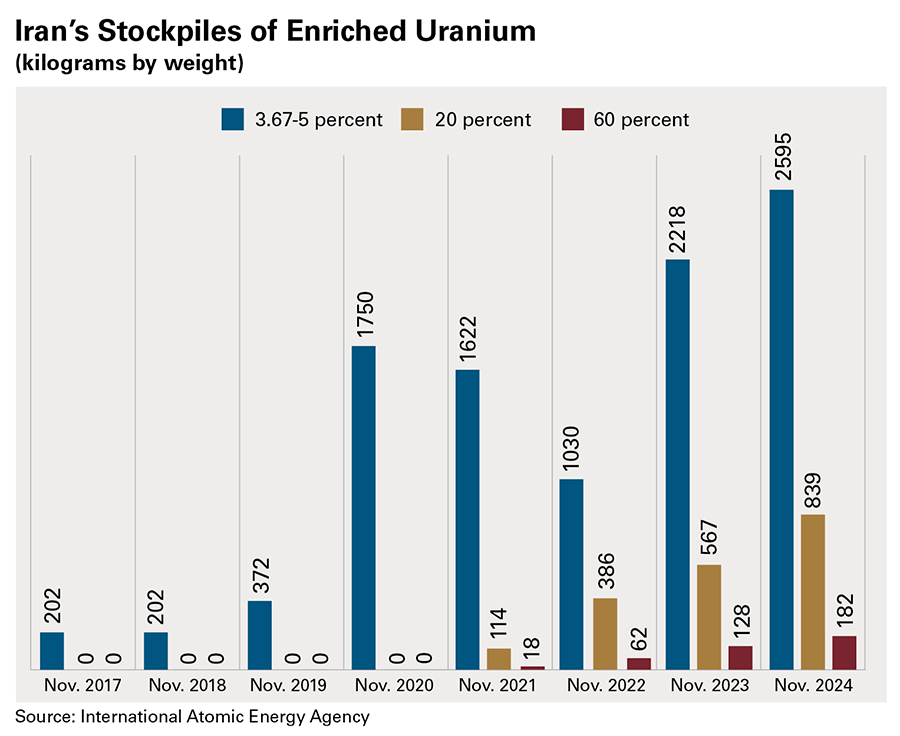
It is important to note all of the nations involved in the JCPOA. When was the last time you had the major NATO powers aligned with both Russia and China? I am going to say… never? Only two groups opposed it, Republicans (because they opposed everything Obama did) and Israel. I think the JCPOA was a monumental victory for diplomacy and the world. It was effective in reducing the amount of weapons grade uranium possessed by Iran. So of course Trump ripped it all up when he took office in 2016. Not surprisingly, Iran has since been creating more weapons grade nuclear material.
Why Iran?
It is a fair question to ask what makes Iran different from other countries that have developed nuclear weapons over the past 50 years? I think the short answer is relatively unprincipled. Yes, Iran has sponsored terrorist affiliates, brutally repressed its people, and is ruled by religious fanatics. But…. other countries are ruled by religious fanatics, other countries have brutally repressed their citizens, and other countries have supported terrorist affiliates.
Most of the attackers on 9/11 were Saudi. Osama ben Laden was found and killed in Pakistan. North Korea is brutally repressive. The Chinese have been accused of crimes against humanity for their treatment of the Uighers. What’s happening in central Africa is horrifying. What happening in El Salvador is very upsetting. Israel, America’s ally, has systematically razed Gaza, displacing millions, killing thousands. Russia invaded Ukraine for transparently imperialist reasons, and is responsible for over half a million deaths. And ICE agents are arresting and killing Americans, as they attempt to deport immigrants.
What makes Iran different?
I think the answer is two fold. The first is that Iran is not yet a nuclear power, nor is it protected by a nuclear power. A person could believe that a war with Iran doesn’t engage “mutually assured destruction.” I think this is naive. More later.
The second is Israel. For the Baby Boomer generation (and the Greatest Generation) supporting Israel is like breathing. It is so baked in to American politics you don’t see the ingredients. For evangelicals, supporting Israel is critical to bringing about the biblical prophesy Armageddon and the Rapture. The conservative Andrew Sullivan writes:
The only way to describe American evangelicals’ view of Israel is religious fetishization, even worship. Rooted in the Old Testament, Senator Kevin Cramer declared this week, for example, that “we have a Biblical responsibility” to the Jewish state. Ambassador Mike Huckabee has told us that Israel has a Biblical right to all the land between the Euphrates and the Nile. Here’s a video of someone in the Tennessee legislature this week, asking the state to formally rename the West Bank “Judea and Samaria,” as the Netanyahu government does. Tennessee. Someone in Tennessee cares that much about a minor fact in a foreign country. And that concern is deeply genuine and passionate.
Sullivan goes on to note that many of the current leaders in the military have characterized this war in biblical terms. A quote from a complaint filed by service members objecting to having religion forced upon them stated:
our commander ... urged us to tell our troops that this was ‘all part of God’s divine plan’ and he specifically referenced numerous citations out of the Book of Revelation referring to Armageddon and the imminent return of Jesus Christ.
For most American Jews, supporting Israel — until perhaps recently — was a big part of our religious education, our culture, and our world view. Scarred by the horrors of the holocaust, Israel was the assurance to us that if the shit ever hit the fan again, we would have a nation to defend us, and some place to go. I will say I grew up with these ideas, and never saw it as dual loyalty — rather just my people’s version of interest group politics. And honestly, I think that is exactly what it is.
The idea that America’s interests and Israel’s interest might diverge, was nearly beyond my, and many people’s comprehension. Sullivan shared this quote from Nancy Pelosi:
I have said to people when they ask me if this capitol crumbled to the ground, the one thing that would remain is our commitment to our aid — and I don’t even call it aid — our cooperation with Israel because that is fundamental to who we are.
And yet…. I don’t think this war is in Israel’s or America’s interests, but Netanyahu, the lawfully elected leader of Israel, does, and for many Americans that is enough. Should it be?
Why Now?
The Atlantic has catalogued 10 different rationals given by the Trump regime, the past week, for why we have gone to war now with Iran. They are:
Iran posed an imminent threat to the United States
Iran was close to developing a nuclear weapon
The war will halt the terrorist proxies Iran supports around the world
Regime change for the beleaguered Iranian people
Iran interfered with US elections
It is the only way to achieve world peace
We are doing it for our children
A preemptive strike before Iran can assassinate Trump
Fulfill God’s plan
The Iraeli’s made me do it
I think all of these, are kind of bullshit (was a weapon really imminent after the twelve day war?) but they all likely played a part in Trump’s thinking, especially the last one. Secretary of State and National Security Advisor Marco Rubio kind of said the quiet part out loud:
The president made the very wise decision — we knew that there was going to be an Israeli action, we knew that that would precipitate an attack against American forces, and we knew that if we didn’t preemptively go after them before they launched those attacks, we would suffer higher casualties …
In testimony before the Senate this week, Elbridge Colby, the under secretary of defense for policy admitted that Israel was the show runner:
Senator Reed: If regime change was not the military objective, why was the first objective in the campaign the attack and death of Khamenei and key leaders of the regime?
Eldridge Colby [the under secretary of defense for policy]: Those were Israeli operations.
It sure looks like Israeli intelligence picked up that most of Iran’s senior leadership would be in one place, and they told Trump they were going to attack, with or without American support. So why did Trump, who campaigned very explicitly on “no forever wars,” and no regime change, join in?
Honestly, I think it is because he thinks it is good TV.
Trump’s approval numbers, his ratings, are at a record low. Minnesota was a total shit show, so bad that he had to put the series on hiatus and fired the show runner. The Epstein Files continue to dominate the new cycle, and worse, actual reports of him abusing a teenage girl have surfaced. The special elections are going badly, and the mid-terms look like a disaster. Trump thought Venezuela would get the audience on his side, but strangely, the reaction was muted. But Iran! The boogie man of the 1980s (where Trump still lives) the enemy of Israel, the great Satan! Going to war with Iran is the perfect plot twist designed to get the audience back, and leave Trump riding high. Or at least, I think that’s what was running through his diminished little brain.
So we went to war with Iran now because Israel dragged us in, and Trump didn’t say “no” because he thought attacking Iran would make him look strong, and everyone would rally around him and the flag. Trump think this war is in his interest, and whatever is in his interest is in America’s interest. “L’Etat c’est moi.”3
What Could Go Wrong?
Trump was interviewed by Jonathan Karl, of ABC News:
TRUMP: I hope you are impressed. How do you like the performance? I mean, Venezuela is obvious. This might be even better. How do you like the performance?
KARL: Nobody questions the success of the military operation, the concern is what happens next.
TRUMP: Forget about next. They are decimated for a 10-year period before they could build it back.
“Forget about next,” is really the perfect description of Trump’s entire approach to life. This is a guy who, despite many bankruptcies, multiple failed marriages, numerous adverse judgments and convictions, including felonies, and endless scandals, has managed to avoid serious accountability. But “forget about next” is no way to run a nation, and there are a lot of very bad “nexts” that if Trump can forget, I cannot.
He could blow up the economy. As readers of Rick or Treat know, I am very nervous about the state of the economy. Too large a portion of our growth hinges on the meteoric success of AI. It may well be that we are in a bubble. A war could pop that bubble, and we could be in for a serious correction. The economy is already looking a little fragile. Even before the war, the number of people with jobs declined, and the unemployment rate rose.
The price of oil could rise and stay up. As noted perviously, nearly 20% of the world’s oil passes through the Strait of Hormuz. If shipping in the Persian Gulf grinds to a halt, then the supply of oil will decline, and the price will rise. It has already gone from $60 a barrel to $90. This will make everything more expensive for everyone. And make power more expensive, which ties in to the first point above. AI needs lots of power. Oh and helium for some reason. Nearly 40% of which comes from Qatar through the straits.
We could start WWIII. Already Iran is attacking other Middle Eastern nations. Basically Iran is saying “you will all feel our pain.” What if they fight back? Remember Iran is Shia and most of the rest of the Middle East is Sunni. There is already a lot of tinder, did we just light the spark? Azerbaijan has already said that it will enter the war. Who is next?
Iran could collapse. We are already talking about arming the Kurds in Iran. If Iran descends into factional violence it will become a failed state. A failed state with a lot of arms. The Iranian oil production will plummet, and refugees will stream across Iran’s borders trying to escape the violence. How amenable is Turkey going to be to taking on refugees from a war we started, and after we arm the Kurds, whom they have been suppressing for years? This could be the mother of all humanitarian crises.
We are wasting out ammo. Because we permitted the financialization of our defense manufacturing base, we don’t have the manufacturing capacity to sustain this war and continue to protect our interests around the world. Every missile we shoot at Iran or Iranian attack munitions is a missile that we can’t sell to Ukraine to halt a Russian invasion and protect the rest of Europe. Ukraine of course saw this coming, and has tried to ramp up its own defense industry. Ironically, Ukraine is now teaching the US how to deal with Iranian drones, as the Russians have been throwing them at Kyiv for 4 years now.
We are giving China a free pass to take Taiwan. Low on ammo. Bought in to the notion that great powers can do whatever they want. What will be Trump’s response to a Chinese invasion of Taiwan? I guarantee the answer is that he will simply shrug his shoulders and move on. But Taiwan is the source of much of the world’s computer chips. No chips, no AI. And no lots of other things too.
We end up fighting a forever war. Just ask the Russians in Afghanistan, or the Bush officials who took America into Iraq, wars in the Middle East have the nasty habit of never ending. How much American blood and treasure are we going to spill, how much innocent lives will be lost in Iran and elsewhere, and what will we ultimately gain from it?
We become a magnet for terrorist attacks. This one is self-explanatory, and I don’t feel the need to dwell on it, but it is quite possible this war will make us less safe at home.
Where does this leave us?
There is no question that the Iranian regime is brutally repressive and has exported violence beyond its borders. I am not shedding a tear for them. But I don’t see how they are different from many other brutally repressive regimes. And our hands are not a clean as they once were. Just ask anyone in Minnesota. I think this war serves Trump’s and Netanyahu’s interests first, and not America’s. There is a possibility it could all end quickly, and perhaps my parade of horribles above will not come to pass. I pray for that result. But we are taking huge risks in attacking Iran, and if even just one of my eight horribles comes true, we will be regretting this conflict for many years to come.4
Israel, at the time, viewed Iraq as the greater threat, and engaged in quasi-legal operations to sell Iran US weaponry.
It is worth noting that total fatalities in the current war between Russian and Ukraine have now matched that total. 350,000 of them on the Russian side. But Trump says “Ukraine no cards.”
I have chosen not to include the legal issues, that Trump did not inform Congress, did not get authorization from Congress, and trampled across the Constitution. Not that they aren’t serious, but they are procedural, and I wanted to focus on the merits.
That was a great reminder of historical context for me. Here’s one more thing to factor in that weighs heavily in my line of work: Iran is one of relatively few countries that has a significant offensive cyber capability. Meaning, they are active in disrupting other countries. And, the current administration has caused a lot of the staff in our cyber defenses to leave for various reasons, including that they have said some truths out loud like that Russia has been involved in manipulating our elections. So we will also be fighting a forever war low on ammo on the cyber side.
Well argued, Rick. Thank you for putting the history and present context in one place. Your potentail negatives are all rattling around in my brain, too. It's scary.